Senin, 04 November 2013

Stunning Dresses From Miss World 2013

Divas, in this post you can take a look at 28 stunning dresses form Miss World 2013. Miss World 2013 was crowned at Bali Nusa Dua Convention Center in Bali, Indonesia. The winner this year is the proud contestant from the Philippines Megan Young. This is the first time that Philippines wins at a Miss World competition. 127 contestants from all over the world competed in beach fashion, fitness, world fashion, talent and “Beauty with a Purpose”.
Marine Lorphelin from France finished second, while Carranzar Shooter form Ghana third. In top 6 finished also the girls from Spain, Brazil and Gibraltar. Here Divas, in this selection you can see 28 stunning dresses from this year’s Miss World. Enjoy!


Selasa, 22 Oktober 2013

Fashion Forward Season 2 Runway

If there’s one thing that Amato does well, it’s throw a good show. In the region’s capital of all things grandiose, showmanship was surprisingly absent from the Fashion Forward Season 2 runways. Cue Furne One, the UAE’s most successful red carpet designer.
What Furne One understood early in his career was the power of creating and visually representing a clear storyline. Last season, he created his own video projections which showcased a bleeding gothic muse. This season, he featured two quintessential feminine images: the spoiled and lavish Marie Antoinette and the demure and phantasmagorical geisha merged into one being, journeying down the catwalk and through scaffolding. Meters and meters of tulle, lace, and silk made for a heavily produced collection. Stiff, sculpted powdered hair and huge poufs sprayed in orange, green, and pink were matched with obi belts cradling a basket or a teddy bear. White leg warmers met ruff collars and pieces of high jewelry. The clothes were all presented in macaroon hues or immaculate white.
Furne One’s inspiration was a complicated one to execute, but it was accomplished with artistry and reminded of the styling creativity of Tokyo’s Harajuku girls. The dresses were all fitted and embellished to the maximum and we expect that each will find a happy client hungry for intricate design (although the dresses will likely be sold without the accompanying ornaments). At this stage, we knew that Furne One could create show-stopping pieces—the intricacy here was in cohesively merging his ideas into a single collection. A strong conclusion to a Fashion Forward season marked by designers lacking focus, bravura, and, for the most part, a skillful studio.


Fashion Batik

Javanese traditional batik, especially from Yogyakarta and Surakarta, has notable meanings rooted to the Javanese conceptualization of the universe. Traditional colours include indigo, dark brown, and white, which represent the three major Hindu Gods (Brahmā, Vishnu, and Śiva). This is related to the fact that natural dyes are most commonly available in indigo and brown. Certain patterns can only be worn by nobility; traditionally, wider stripes or wavy lines of greater width indicated higher rank. Consequently, during Javanese ceremonies, one could determine the royal lineage of a person by the cloth he or she was wearing.
Other regions of Indonesia have their own unique patterns that normally take themes from everyday lives, incorporating patterns such as flowers, nature, animals, folklore or people. The colours of pesisir batik, from the coastal cities of northern Java, is especially vibrant, and it absorbs influence from the Javanese, Arab, Chinese and Dutch cultures. In the colonial times pesisir batik was a favourite of the Peranakan Chinese, Dutch and Eurasians.
UNESCO designated Indonesian batik as a Masterpiece of Oral and Intangible Heritage of Humanity on October 2, 2009. As part of the acknowledgment, UNESCO insisted that Indonesia preserve their heritage.


Kebaya Anne Avantie

A Kebaya is a traditional blouse-dress combination that originates from Indonesia and worn by women in Indonesia, Malaysia, Brunei, Burma, Singapore, southern Thailand, and the Southern part of the Philippines. It is sometimes made from sheer material such as silk, thin cotton or semi-transparent nylon or polyester, adorned with brocade or floral pattern embroidery. Kebaya usually worn with a sarong or batik kain panjang, or other traditional woven garment such as ikat, songket with a colorful motif.
The kebaya is the national costume of Indonesia, although it is more accurately endemic to the Javanese, Sundanese and Balinese  peoples.


Sabtu, 12 Oktober 2013

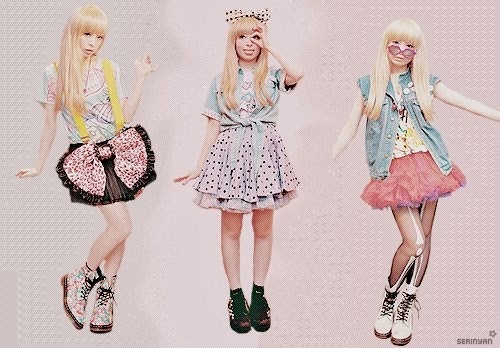
Harajuku Style

Harajuku (原宿) in Japan refers to an area around Harajuku train station. Harajuku style is a japanese fashion adopted by the teenagers and young adults in the area and its side streets which have many boutiques, trendy stores and used clothes shops.
Japanese Harajuku Girls and Harajuku Style has been used to describe teens dressed in many fashion styles ranging from Gothic Lolita (also gothic loli) Visual Kei, Ganguro, Gyaru, Kogal, to "cute" Kawaii style clothing.
harajuku girls
Young adults in Harajuku may also be dressed as anime or manga characters (known as cosplay). Below we list the best online harajuku fashion stores and show you where to buy the very best in Japanese street fashion. The shops listed sell Japanese Harajuku fashion direct from Japan as well as from europe and USA.


Senin, 07 Oktober 2013

Street Style Milan Fashion Week

Milan Week

 Coats may have been the talk of the town in London, but accessories are the stars of Milan street style. Thanks to Paris-based photographer Shophie Mhabile, we’ve captured all the action from the first day of Milan Fashion Week Spring 2014, spotting Italian fashion bloggers and international icons alike outside the shows.


Bringing her grey twisted-sleeve Céline dress to a whole new level was Anna Dello Russo, who rocked another pair of furry heels as she swept the streets clean in Loewe black sandals, adorned with winged fur at the heels.


Sunglasses are a necessity when it comes to Fashion Week: with a sea of photographers crowding outside show venues, there’s nothing like a pair of sunnies to help shade your eyes from the constant flashes. While Italy’s It Girl, Eleonora Carisi of Jou Jou Villeroy added edge to her floral dress with mirrored cat eyes, Giovanna Battaglia rocked a fun pair of shades while showing off her bespoke Gio clutch, courtesy of her sister, designer Sara Battaglia who had her first presentation at MFW. (When can we put in an order for our own custom bag?)


Other standout items from this batch of street style photos include an ace of heart-inspired clutch, intricately designed lace bunny ears and a kitty purse. It certainly goes without saying that after day one, we’re eager to see what the rest of Milan Fashion Week has in store when it comes to street style.

  Referensi :

  • http:jmodefashions.com/

  •  http:guestofaguest.com/fashion/steal-the-street-style-get-inspired-by-these-winter-looks&slide=3

Senin, 23 September 2013

Definisi dan Sejarah Fashion

Mode atau fesyen (Inggris: fashion) adalah gaya berpakaian yang populer dalam suatu budaya. Secara umum, fesyen termasuk masakan, bahasa, seni, dan arsitektur.


Thomas Carlyle mengatakan, "Pakaian adalah perlambang jiwa. Pakaian tak bisa dipisahkan dari perkembangan sejarah kehidupan dan budaya manusia." Fesyen dimetaforakan sebagai kulit sosial yang membawa pesan dan gaya hidup suatu komunitas tertentu yang merupakan bagian dari kehidupan sosial. Di samping itu, mode juga mengekspresikan identitas tertentu.

Fesyen yang dipilih seseorang bisa menunjukkan bagaimana seseorang tersebut memilih gaya hidup yang dilakukan. Seseorang yang sangat fashionable, secara tidak langsung mengkonstruksi dirinya sebagai seseorang dengan gaya hidup modern dan selalu mengikuti tren yang ada. Hal ini menunjukkan bahwa dalam dunia modern, gaya hidup membantu menentukan sikap dan nilai-nilai serta menunjukkan status sosial.

Menurut Malcolm Barnard, etimologi kata fashion terkait dengan bahasa Latin, factio artinya "membuat". Karena itu, arti asli fesyen adalah sesuatu kegiatan yang dilakukan seseorang. Sekarang, terjadi penyempitan makna dari fesyen. Fesyen sebagai sesuatu yang dikenakan seseorang, khususnya pakaian beserta aksesorinya.

Fesyen didefinisikan sebagai sesuatu bentuk dan jenis tata cara atau cara bertindak. Polhemus dan Procter menunjukkan bahwa dalam masyarakat kontemporer barat, istilah fesyen kerap digunakan sebagai sinonim dari istilah dandanan, gaya, dan busana.

Kota fashion

Beberapa kota dianggap sebagai pusat fashion dunia adalah New York, Milan, Paris, dan London.


Sejarah fashion

Fashion adalah suatu sistem penanda dari perubahan budaya menurut suatu kelompok atau adat tertentu. Bisa juga sebagai strata pembagian kelas, status, pekerjaan dan kebutuhan untuk menyeragamkan suatu pakaian yang sedang merek.

Medieval

Sekitar tahun 1000 Masehi, fesyen dengan gaya Eropa klasik abad ke-16 terlihat memiliki baju yang besar dan tidak minimalis, pada zaman tersebut semua model sangat terkesan sopan.

1910 - 1930

Fesyen model ini masih ada dan digunakan hingga sekarang, pakaian yang sederhana dengan topi bundar bagi perempuan dan topi baret bagi laki-laki. Kemeja yang biasa digunakan untuk kegiatan resmi seperti setelan jas yang biasa digunakan hingga saat ini.

1940 - 1950

Era Perang Dunia II dan Perang Dingin, masa-masa klasikal saat foto mulai marak. Pakaian yang berkerah bundar dan lebar dengan baju luaran mulai populer. Model Pria masih sama dengan era fesyen sebelumnya, sopan dengan topi dan jas.

1970 – 1980

Pada era ini semua orang sudah mengenal fesyen. Dengan terkenalnya Madonna pada tahun 1980-an, Elvis Presley pada tahun 1970-an, dan perkembangan televisi memulai perkembangan fesyen secara global. Mulai ada pakaian bernuansa gothic. Pakaian berbahan denim mulai sangat populer seiring populernya musik disko.

1990 – sekarang
Hampir semua bangsa mempunyai andil dalam menciptakan tren fesyen di masing-masing negaranya, di setiap negara biasanya memiliki tren tersendiri dan presepsi yang berbeda dalam berekspresi tentang fesyen, sehingga fesyen yang tercipta hampir tidak ada batasannya pada era ini.

Referensi